What Is a Forest Survey
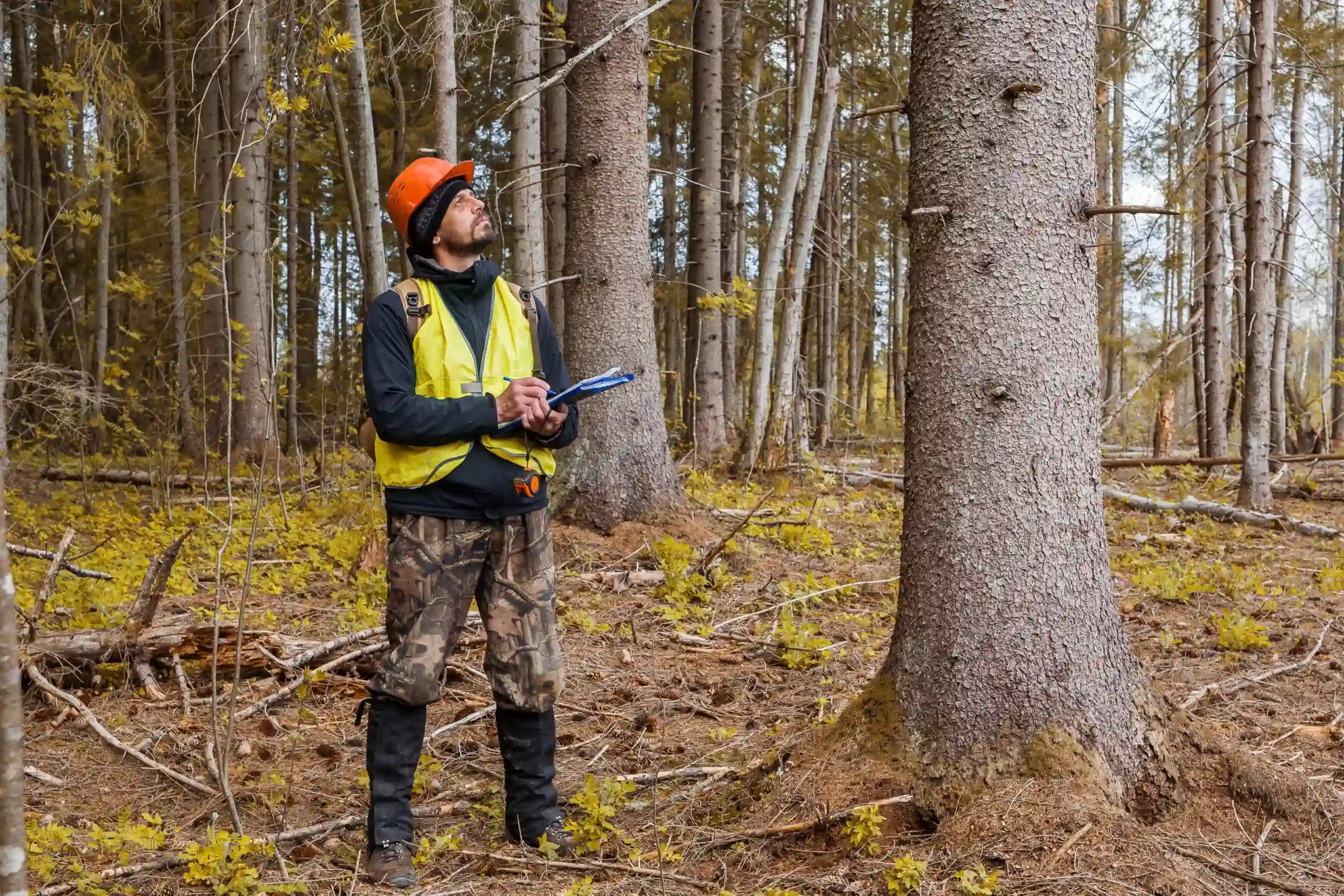
A forest survey is a method in which systematic field measurements and statistical estimates are used to map the condition, stand structure, and productive capacity of a forest. The data obtained forms the basis for sustainable forest management and conservation planning.
The most important parameters measured include:
- Stand density (number of trees in the given area)
- Trunk diameter (DBH, diameter at breast height)
- Tree height (height of individual trees and height distribution)
- Basal area (sum of cross-sectional areas calculated from trunk diameters)
- Increment (annual biomass growth)
- Total volume (total timber volume of the stand)
- Species composition (which species are present and in what proportion)
- Biomass and carbon stock (estimates of the stand's biomass and carbon reserves)
Forest surveys are critically important for all forestry companies (whether state or private), because economic decisions are based on this data. Production, harvesting, replanting, and long-term planning all depend on survey results.
Limitations
❗ Time-consuming: field data collection and processing often takes weeks or months.
❗ Costly: surveys require significant manual labour and equipment, resulting in substantial costs.
❗ Inaccuracies: sampling errors and uncertainty from statistical calculations reduce the reliability of results.